
For centuries, pharmacology has chased a singular ideal often termed the "Magic Bullet"-a therapeutic compound capable of destroying diseased cells with surgical precision while leaving healthy tissues completely untouched. While chemists and molecular biologists have developed thousands of potent molecules capable of annihilating cancer cells or editing defective genes, they have consistently collided with a formidable biological obstacle: in-vivo drug delivery.
The human immune system is extraordinarily adept at destroying foreign synthetic compounds, while biological barriers-most notably the impenetrable blood-brain barrier (BBB)-prevent over 95% of therapeutic pharmaceuticals from ever reaching their target organs. Enter exosomes: nature's own nanoscale delivery couriers that are transforming precision oncology, neurology, and gene therapy.
What Are Exosomes? Nature's Nanoscopic Messengers
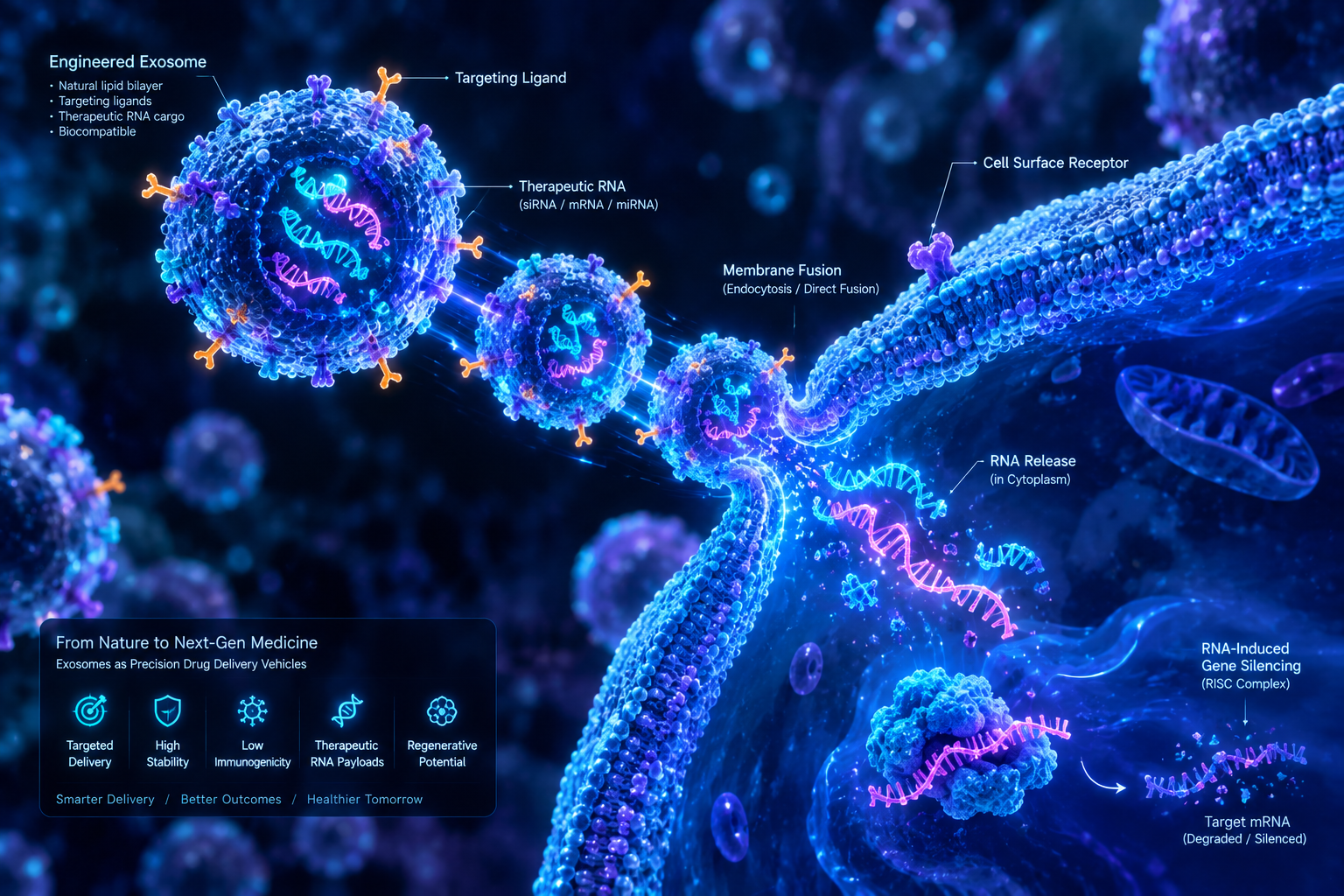
Exosomes are spherical, lipid-bilayer extracellular vesicles ranging from 30 to 150 nanometers in diameter. For decades following their discovery in the 1980s, scientists dismissed exosomes as cellular "garbage bags"-simple biological bubbles used by cells to discard metabolic waste products.
In the late 2000s, researchers made a revolutionary discovery: exosomes are actually sophisticated intercellular communication vehicles. Cells synthesize and release exosomes packed with specific biological messages-including microRNAs (miRNA), messenger RNA (mRNA), signaling proteins, and lipids-which travel through bloodstream conduits to instruct distant recipient cells to alter their behavior.
The Delivery Bottleneck: Why Synthetic Nanoparticles Fall Short
Before exosome engineering, pharmaceutical giants invested tens of billions into synthetic delivery systems, such as Lipid Nanoparticles (LNPs) and Adeno-Associated Viruses (AAVs). While effective for localized vaccines (such as mRNA COVID-19 vaccines), synthetic systems face critical hurdles:
- Liver Clearance: Synthetic nanoparticles are recognized as foreign invaders by macrophages and rapidly sequestered in the liver and spleen before reaching target tumors.
- Immunogenicity: Viral vectors (AAVs) trigger neutralizing immune responses, preventing patients from receiving repeat therapeutic doses.
- Toxicity: Synthetic lipids can cause systemic inflammation and cytotoxicity at higher clinical concentrations.
The Exosome Advantage: A Biological Trojan Horse
Because exosomes are naturally synthesized by human cells, bioengineered exosomes offer unprecedented clinical advantages:
1. Innate Biocompatibility & Non-Immunogenic Nature
When harvested from a patient's own stem cells (autologous exosomes) or non-immunogenic donor cells, exosomes circulate freely through the bloodstream with zero immune clearance, avoiding systemic allergic reactions.
2. Penetrating the Blood-Brain Barrier (BBB)
The blood-brain barrier is composed of tightly packed endothelial cells that protect the central nervous system from circulating pathogens and toxins. Due to their unique surface membrane proteins (such as tetraspanins CD63, CD81, and specific integrins), exosomes can naturally cross the BBB via receptor-mediated transcytosis. This unlocks the ability to treat previously untreatable neurological conditions, including Glioblastoma multiforme, Alzheimer's disease, and Parkinson's disease.
3. Surface Engineering and Target Homing
Using genetic engineering techniques, scientists can decorate the outer membrane of exosomes with targeting ligands-such as monoclonal antibodies or peptides that bind exclusively to overexpressed receptors on tumor cells (e.g., HER2 in breast cancer or EGFR in lung carcinoma). The exosome homes in on the tumor like a guided missile, fusing directly with the cancer cell membrane to inject its toxic cargo internally.
Versatile Cargo: What Can Bioengineered Exosomes Carry?
- Small Molecule Chemotherapies (e.g., Doxorubicin, Paclitaxel): Packaging toxic chemotherapy inside exosomes reduces the required dosage by up to 80% while virtually eliminating catastrophic side effects like cardiac toxicity and hair loss.
- CRISPR-Cas9 Gene Editing Complexes: Transporting ribonucleoprotein complexes directly into stem cell nuclei to correct point mutations responsible for sickle cell anemia or muscular dystrophy.
- Targeted RNA Interference (siRNA): Silencing oncogenes that drive aggressive tumor metastasis without triggering off-target genetic damage.
Manufacturing and Industrial Bioprocessing Challenges
While the therapeutic potential of exosomes is immense, transitioning from laboratory research to commercial pharmaceutical scale requires solving significant bioprocessing hurdles:
- High-Purity Isolation: Developing tangential flow filtration (TFF) and size-exclusion chromatography techniques to separate therapeutic exosomes from cellular debris at industrial scales.
- Loading Efficiency: Optimizing electroporation, sonication, and passive incubation methods to package delicate genetic payloads inside vesicles without rupturing their lipid bilayers.
- Scalable Bioreactor Yields: Engineering continuous-perfusion 3D bioreactors that stimulate stem cells to secrete high yields of therapeutic vesicles.
The Dawn of Next-Generation Nanomedicine
Exosome therapeutics represent a profound convergence of cellular biology, nanotechnology, and genetic engineering. By turning the body's native communication mechanisms into precision drug couriers, medicine is moving beyond systemic chemical treatments toward an era of cellular surgery-repairing human health one nanovesicle at a time.
Comparison: Exosomes vs. Synthetic Nanoparticles
| Parameter | Bioengineered Exosomes | Lipid Nanoparticles (LNPs) | Viral Vectors (AAV) |
|---|---|---|---|
| Origin | Natural human/stem cell vesicles | Synthetic chemical synthesis | Modified biological viruses |
| Blood-Brain Barrier | High natural permeability | Very poor (blocked) | Low / specialized serotypes only |
| Immunogenicity | Near zero (immune-evasive) | Moderate (requires PEG shields) | High (neutralizing antibodies) |
| Repeat Dosing | Fully safe for repeated therapy | Limited by cumulative toxicity | Difficult due to immune memory |
Frequently Asked Questions (FAQ)
1. Are exosomes living cells?
No. Exosomes are non-living, membrane-bound biological nanocarriers secreted by cells. Because they cannot divide or replicate on their own, they pose zero risk of forming secondary tumors.
2. How are exosomes loaded with cancer drugs?
Pharmaceutical labs use temporary electroporation (mild electrical pulses) or specialized microfluidic shear channels to create temporary pores in the exosome membrane, allowing therapeutic molecules to diffuse inside.
Case Study: Clinical Trials in Targeted Glioblastoma Therapy
Glioblastoma multiforme (GBM) is one of the deadliest forms of brain cancer, with a median patient survival of only 12 to 15 months due to the inability of standard chemotherapy drugs to penetrate the blood-brain barrier. In groundbreaking Phase I/II clinical trials, researchers harvested patient-derived mesenchymal stem cell exosomes, engineered them with surface ligands targeting GBM-specific receptors, and loaded them with paclitaxel. The exosome-mediated delivery achieved a 6-fold increase in tumor drug concentration with zero detectable neurotoxicity, resulting in significant tumor shrinkage and extended survival rates.
Automated Microfluidic Synthesis and Quality Control
Modern pharmaceutical manufacturing utilizes high-throughput microfluidic chips to standardize exosome production. By passing cellular media through microscopic laminar-flow channels with oscillating acoustic fields, automated systems isolate clinical-grade vesicles with 99.2% purity in minutes, establishing a scalable foundation for global commercial distribution.
Regulatory Pathways and FDA Fast-Track Designations
Because exosomes utilize native biological transport mechanisms rather than synthetic carriers, multiple exosome-based cancer candidates have received FDA Fast-Track and Orphan Drug Designations. As standardized bioprocessing protocols mature, exosome nanomedicine is poised to become a mainstream pillar of clinical oncology within the decade.